Travelling abroad can be thrilling — but let’s be honest, being stuck with a dead phone or laptop at the worst possible moment? Not so much. If you’re planning a trip and want to keep all your gadgets alive, choosing the right power bank matters more than ever.
This guide is for international travelers who depend on their tech — digital nomads, business professionals, remote students, or that person in the group always looking up train times and sharing the next best café find.
I’ll walk you through everything from battery capacity and charging speeds to what really matters for different countries and airlines. If you want peace of mind, productivity, and a little sanity while on the go, you’re in the right place.
Why Your Power Bank Choice Matters for International Travel
Not all power banks are created equal, especially once you leave home turf. International travel doesn’t just mean longer days — it means language barriers, power outlet differences, and time zones.
Power Outages and Long Travel Days
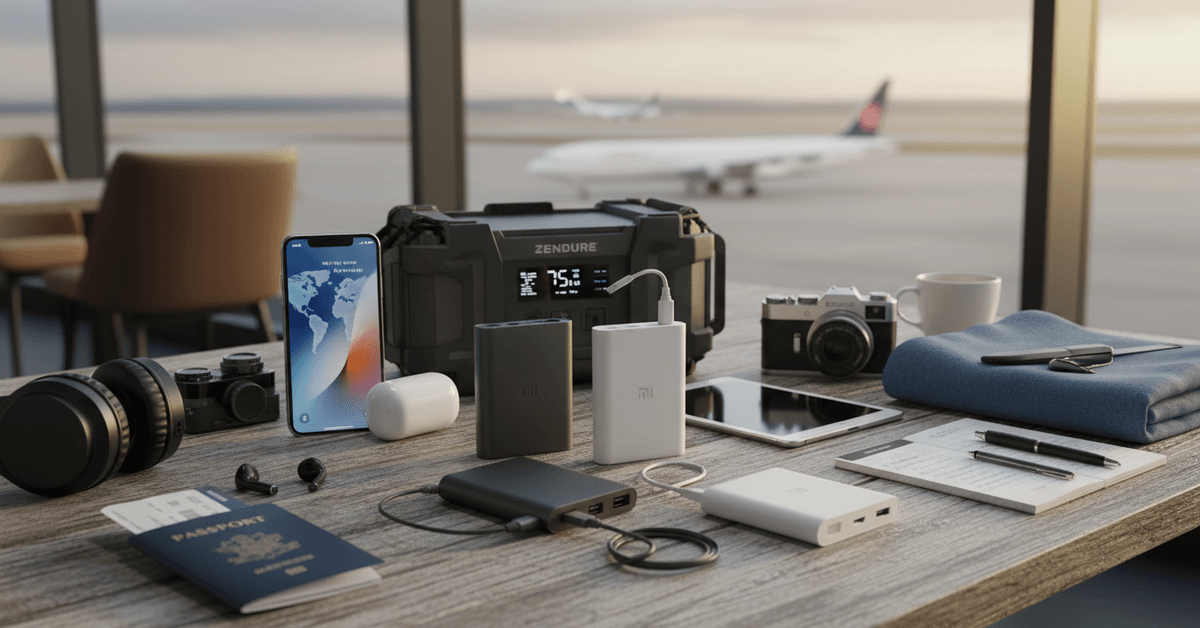
It sometimes happens: you board a 10-hour flight, only to find no outlet for your tablet. Or you’re in a region prone to unplanned blackouts.
A reliable power bank can be your lifeline for navigation, communication, or simply winding down with a good series.
Regional Power Plug Differences
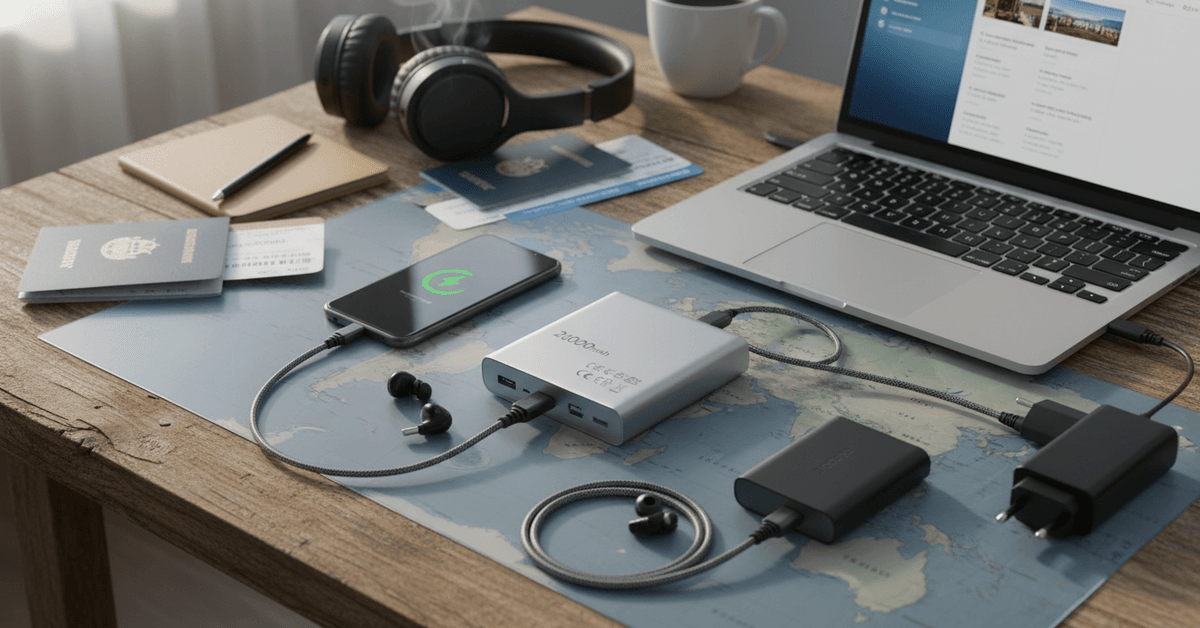
Adapters only help you plug in, but power banks let you sidestep plug incompatibility altogether—charging your phone wirelessly on the move or during layovers.
Strict Airline Rules
Airlines—notably in the US, EU, and Asia—often have firm restrictions about battery size onboard. Pick the wrong one, and you might lose your power bank at security.
Main Features to Look For in a Travel Power Bank
I’ve made all the wrong choices so you don’t have to. Here’s what you should weigh before clicking “add to cart.”
Battery Capacity (mAh) — What Do Those Numbers Really Mean?
Bigger isn’t always better. Ideally, capacity matches your gadget needs, trip length, and airline limits.
Look for something between 10,000mAh to 20,000mAh for most travelers—enough for several phone charges, but typically below the 27,000mAh (100Wh) limit for international flights.
Check Output Power and Fast Charging Standards
Modern devices crave fast charge protocols like USB-PD (Power Delivery) or Quick Charge. It’s frustrating to discover your bank’s output is too slow for your laptop or gaming device.
If you use a MacBook, iPad Pro, or latest Samsung, check your charger can deliver 18W or more through USB-C.
Port Selection and Type
Multiple ports are gold. At least one USB-C (ideally two), plus USB-A for legacy devices, covers your bases. Don’t ignore Wireless Charging either — it’s convenient at the airport lounge, no matter the cable situation.
Size, Weight, and Build Quality
If it’s too bulky, you won’t pack it. Prioritize lightweight, slim designs, especially if you’re aiming to travel carry-on only. Some models now integrate cables, which means one less thing to lose.
International Safety and Certification
Look for CE, RoHS, or UL certifications—especially important if your journey spans the US, Europe, or Southeast Asia. Some countries can confiscate or fine you for non-compliant electronics.
Global Airline and Border Restrictions You Need to Know
Regulations around lithium-ion batteries can feel like a minefield. Most airlines follow similar guidelines, yet you’ll find subtle differences if you dig.
Carry-On Rules for Power Banks
Almost no airline lets you check a power bank in your luggage. Instead, pack it in your carry-on. That’s because lithium-ion batteries pose a fire risk if heated or damaged in the cargo hold.
Maximum Capacity Allowed on Planes
The magic number is usually 100Wh (watt-hours), equivalent to about 27,000mAh at 3.7V.
Some major airlines and regions (like the EU or the US TSA) may let you travel with larger banks (up to 160Wh), but you’ll often need airline approval. Don’t guess! Always check your airline’s website in advance.
See Airline-Specific Guidance
- United States (TSA): Check the official TSA battery policy
- European Union Carriers: Most follow EASA guidelines (100Wh limit, carry-on only)
- Asian Airlines: Some (like Singapore or Cathay Pacific) may ask to inspect high-capacity power banks at boarding.
How Many Devices (and Which Ones) Do You Really Need to Charge?
Before choosing a power bank, list the devices you actually use during travel. Most travelers need to charge a phone, earbuds, smartwatch, tablet, camera, or portable hotspot.
Smartphone-Only Travel
A single 10,000mAh model can cover 2–3 full charges for most modern phones. Make sure the output matches your device’s needs (some newer iPhones like 18W USB-C, while older ones do fine on 10W USB-A).
Laptop and Tablet Power Users
If your trip is packed with work, blogging, or video editing, consider a 20,000mAh or larger unit with USB-C PD at 30W or more. This lets you top up MacBooks, Surface, or iPad Pros. Though, you’ll want to double-check that airline restriction again.
Accessory Add-Ons
Will you use wireless earbuds, a GoPro, or a travel router? Some multi-port power banks let you simultaneously charge up to four devices.
Many now include trickle charging mode for lower-wattage gadgets. Handy when you realize you forgot to top up your smartwatch the night before.
Tech-Savvy Extras That Matter More Than You’d Think
Power banks aren’t just a battery any more. And in a world hooked on digital trends, these little upgrades can mean big productivity gains.
Pass-Through Charging
This feature lets you charge your bank itself while it delivers power to your devices. If USB sockets are scarce in your hostel or airport, this can be a practical lifesaver.
Built-in Cables
I personally love this trend—especially for short layovers or busy days out. No scrambling for a missing USB-C cord. Some new models offer tuck-away cables plus micro-USB and Lightning adapters all in one unit.
LED Battery Displays
Status lights are fine, but a digital readout (like “43% left”) spares you the faded-LED guessing game. With long travel days, this matters more than you’d expect; you notice yourself checking your gear more often.
Solar Charging Panels
Sounds cool in theory. In practice, solar power banks work best as a backup, not a main source. They charge slowly — but on multi-day treks or if you spend time outdoors, it feels reassuring to trickle-charge your power bank off-grid.
Popular Power Bank Brands for International Travelers
I’ve tested and asked around. Here are brand names that consistently perform well in tech reviews and travel forums.
Anker
Known for reliability, wide port selection, and global certification. Models like the PowerCore 10000 or PowerCore III are favorite go-to options.
RAVPower
Often praised for fast-charging and handy form factors. Some models provide up to 30W output for laptops, plus multi-port charging that suits groups or gadget-heavy trips.
Xiaomi and Zendure
Zendure, for instance, is popular among digital nomads for ruggedness and high-capacity banks. Xiaomi’s Mi Power Banks frequently deliver high value at affordable prices—though check certifications for your region.
Quick Steps: How to Pick Your Ideal Power Bank for Travel
Choosing the right power bank for travel starts with knowing how you actually use your devices. A good option should match your phone, tablet, earbuds, camera, or smartwatch without adding too much weight to your bag.
Check the Battery Capacity
Capacity is usually measured in mAh. A smaller power bank may be enough for one phone recharge, while a larger one is better for long flights, layovers, or multi-device use.
Avoid buying the biggest model automatically because heavier power banks can be less convenient for daily travel.
Look at Charging Speed
Charging speed matters when you have limited time at airports, cafés, hotels, or train stations. Look for USB-C support and fast-charging compatibility if your devices can use it. This helps you recharge quickly instead of waiting too long.
Review Ports and Cable Needs
Choose a power bank with ports that match your devices. Multiple ports are useful if you travel with a phone, earbuds, and tablet. Built-in cables can also reduce clutter.
Think About Travel Rules
Before flying, check your airline’s power bank rules. Keep it in your carry-on and choose a clearly labeled, reliable model.
Hidden Pitfalls: What Most Travelers Forget
- Forgotten charging cable? Happens to everyone. Choose a power bank with integrated cables if you’re prone to forgetfulness (I admit, I’m guilty of this).
- Voltage and input speed: Not all charging adapters work efficiently worldwide. Pair your power bank with a universal wall charger rated for global voltages (100–240V).
- Customs and Security Checks: If questioned, have your power bank details (label, capacity) accessible. Many banks print the WH and mAh values right on the device for this reason.
Staying Productive and Charged: Final Considerations
Your power bank isn’t just a convenience — it's your safety net, your productivity booster, and maybe even your digital travel buddy.
The right choice keeps you connected, informed, and entertained wherever the journey takes you. And no, it doesn’t need to break the bank (pun, perhaps, intended).