Speed is not the same thing as quality. That distinction is easy to forget when Grammarly is cleaning up your draft in thirty seconds flat.
Bloggers are treating AI editing like a full replacement for human judgment. That is the wrong instinct, and it is quietly costing people, readers.
The gap between a clean post and a memorable one is not grammar. It is something harder to automate.
This breakdown covers what AI editing genuinely does well, where human editing still wins by a wide margin, and the one workflow shift that changes the output quality of almost every post you publish.
What AI Editing Tools Do Well
Tools like Grammarly, ProWritingAid, and Microsoft Editor are fast. Genuinely, impressively fast. Thousands of words scanned in seconds, grammar flagged, awkward phrases surfaced.
For bloggers publishing on a schedule, that speed is real value. Catching obvious errors before hitting publish is not glamorous work, but it matters.

Where AI Earns Its Place in a Blogging Workflow
Consistency across a team is one of AI's strongest arguments. When multiple writers contribute to a blog, rules get applied unevenly. AI standardizes that.
Every post gets the same grammar pass, the same spelling check, the same structural feedback.
SEO basics are another genuine win. Several AI tools now flag keyword gaps, check readability scores, and surface potential duplication. For bloggers who do not want to run a separate SEO audit on every draft, this saves a real step.
The integration angle also holds up. AI editors plug directly into WordPress, Google Docs, and Chrome extensions. The workflow friction is nearly zero. For anyone writing daily, that kind of frictionless feedback loop adds up.
Where AI earns its keep:
- Catching grammar and spelling errors in first drafts
- Flagging repeated words and structural awkwardness
- Running SEO basics like readability and keyword density
- Keeping editorial consistency across multiple writers
- Clarifying non-native English writing before human review
Where AI Editing Makes Your Blog Worse
I think the Grammarly dependency problem is more serious than most bloggers want to admit. The tool is not wrong about grammar. It is sometimes catastrophically wrong about voice.
AI Flattens the Writing That Actually Earns Shares
AI editors optimize toward a kind of average. Sentences get smoothed. Unusual constructions get flagged. The phrasing that makes a post feel like a real person wrote it often gets marked as a problem.
Opinion pieces and reviews take the hardest hit. If a reader came to your blog because your take on something felt specific and honest, AI editing can scrub exactly that quality out of the draft.
Tone and personality are not bugs to be corrected. They are the reason someone bookmarks your site over a competitor's.
Context Is the Gap AI Cannot Close
Tech blogs blend practical instruction with humor, opinion, and cultural reference. AI does not reliably read intent. A sentence that lands as dry irony can get edited into a flat statement. A deliberate structural break for effect might get flagged as an error.
For monetized blogs specifically, this creates a second problem. AI will sometimes suggest formatting changes that hurt how readers scan a page.
If ad placement and user engagement are tied to how your headings and visuals are structured, automated formatting suggestions can quietly damage AdSense performance without a single grammar mistake in sight.
What Human Editing Still Does That Algorithms Cannot
A human editor reads the post as a reader first, an editor second. That sequence matters.
Flow and Argument Order Are Human Judgment Calls
Editors catch when a section arrives too early or an argument needs one more beat before the payoff.
That kind of structural intuition does not come from pattern matching on millions of documents. It comes from reading your specific post and asking whether the logic actually lands.
Pacing is the most undervalued editing skill in blogging. Short posts can drag. Long posts can move. The difference is almost always structural, and structure is where human editors genuinely earn their rate.
SEO Strategy Goes Beyond Keywords
AI can suggest a keyword.
Only a human editor thinks about whether the post fits into a content cluster, which internal links would add authority, and whether the angle actually addresses what readers are searching for versus what a keyword tool says they are searching for.
I was skeptical that this distinction was significant until I saw a blogger restructure three posts based on human editorial feedback and increase session duration by a measurable amount while the AI-optimized posts on the same site stayed flat.
Posts where human editing makes the clearest difference:
- Long-form pieces that need narrative arc, not just correct sentences
- Heavily opinionated reviews where voice is the product
- Flagship articles you want ranking and driving recurring traffic
- Content with humor, cultural references, or storytelling
- Final reviews before publishing anything tied to monetization goals
The Hybrid Workflow That Actually Raises Quality
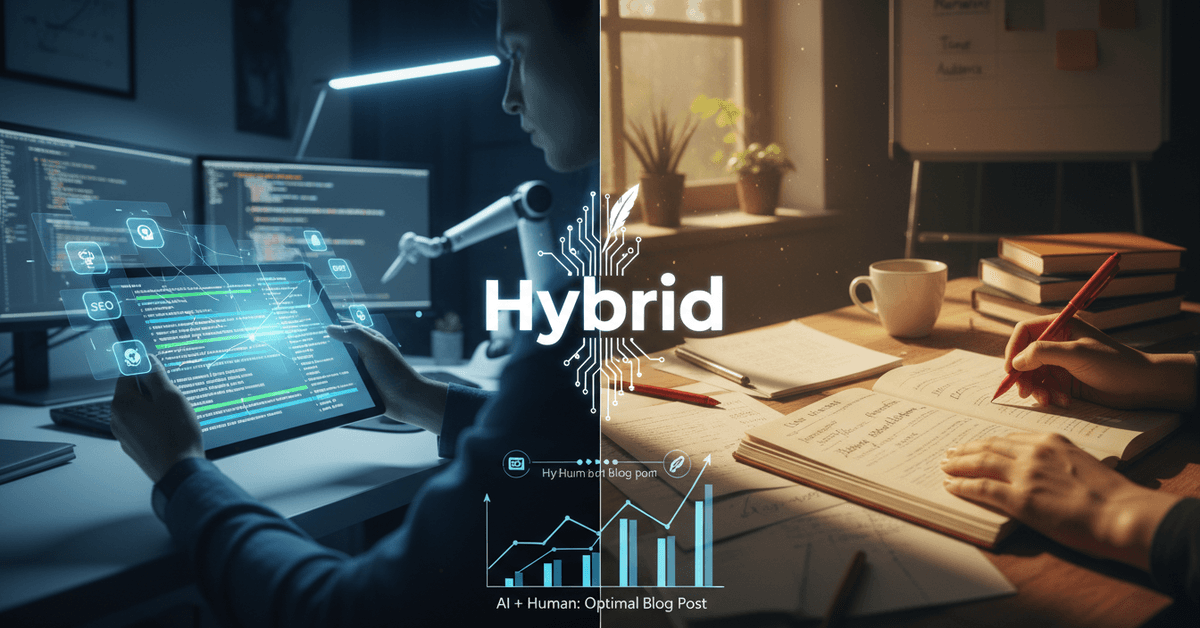
I genuinely disagree with the advice that bloggers should pick either AI or human editing as their primary method. The framing is wrong. The real question is sequencing.
Run AI first. Human second. Always.
AI handles the mechanical layer fast. Grammar, spelling, repeated words, readability score. That clears the noise so a human editor, or even a careful self-edit, can focus entirely on voice, structure, and strategy.
Fast-Turnaround Posts: The Practical Version
For quick posts, a Chrome extension review, a tool comparison, a weekly roundup, run the draft through Grammarly, then spend five focused minutes checking that the tone still sounds like you. That is the whole workflow.
It is faster than a full human edit and meaningfully better than AI alone.
Long-Form Authority Content: The Version That Builds a Blog
For deep guides and flagship articles, flip the balance. Let a human editor focus on argument structure, internal linking strategy, and brand voice.
Then run AI for final punctuation and grammar cleanup. The result is a post that ranks, reads well, and actually sounds like someone wrote it.
| Factor | AI Editing | Human Editing |
|---|---|---|
| Speed | Seconds per draft | Hours to days |
| Grammar and spelling | Excellent | Good |
| Voice and tone | Often damages it | Protects and sharpens |
| SEO strategy | Surface-level keywords | Full content strategy |
| Narrative flow | Limited detection | Core strength |
| Cost | Low to free | Higher investment |
The table tells you the tradeoff, not the answer. Speed without voice gets you a clean post nobody shares.
Questions People Ask About AI vs. Human Editing
Q: Can AI editing replace a human editor entirely for a solo blogger? For quick, high-volume content on straightforward topics, AI handles most of the mechanical load. The problem surfaces when voice and reader trust matter, and for most bloggers trying to build an audience, they always matter.
Q: Which AI editing tool is best for bloggers specifically? Grammarly and ProWritingAid are the most widely used, and both offer free tiers that cover basic grammar and readability. ProWritingAid goes deeper on style analysis, which makes it more useful for long-form content where pattern repetition is a real issue.
Q: Does using AI editing hurt SEO? AI editing itself does not hurt SEO. However, if AI suggestions flatten the specificity and authority of your writing, that indirectly hurts engagement metrics that search engines do read, including session duration and return visits.
Q: Should a human editor review every post before publishing? Not necessarily every post. Prioritize human review for anything tied to monetization, flagship ranking content, or posts where your credibility is on the line. Quick topical posts can usually survive a careful self-edit after an AI pass.
Q: How do I know when AI editing suggestions are wrong for my blog? If a suggestion removes a specific detail, flattens a joke, or makes a sentence sound like it came from a template, ignore it. AI optimizes for average. Your blog earns readers by being specific.
Conclusion
Every blog eventually hits the ceiling of what automated editing can lift it to.
The writers who break through that ceiling are the ones who use AI for speed and humans, even just their own careful second read, for everything that actually makes a post worth reading.
The tool handles the surface. The editor handles what the surface is sitting on.